
Tactile Beauty : Experience arts beyond sight
A project by Letizia Binda-Partensky
Mission
Tactile Beauty translates visual art into touch and sound, so Blind and Low Vision audiences can fully experience galleries, theatres, and public art.
Born in Ottawa, now expanding through a research exchange with Bologna, Italy.
Featured work
Audio description coming soon
Read the transcript
The transcript will appear here once the audio description has been recorded.
Get involved
Help shape the future of tactile art
Tactile Beauty is looking for partners to help bring this work to more institutions, more cities, and more people. Here's how you can be part of it.
-
We're looking for galleries, theatres, and cultural institutions willing to host tactile exhibitions, pilot programs, or research residencies — in Canada or internationally.
-
Tactile Beauty is an evolving practice-based research project. Funding partners help cover materials, fabrication, travel between Canada and Italy, and the time it takes to do this work properly.
-
From tactile fabrication and braille printing to sensor technology and 3D modelling, this project grows through collaboration. If you have technical or artistic skills to offer, we want to hear from you.
-
Tactile Beauty is built with and for Blind and Low Vision communities. We're looking for BLV individuals to give feedback, test prototypes, and help guide the project as development partners — not just end users.
Interested in partnering with Tactile Beauty? Let's talk.
Get in touchThe pieces
Tactile gallery
Selected tactile pieces from the Camions pilot. Move the slider to reveal the original object each one represents.
-
View from the Rossy Pavilion
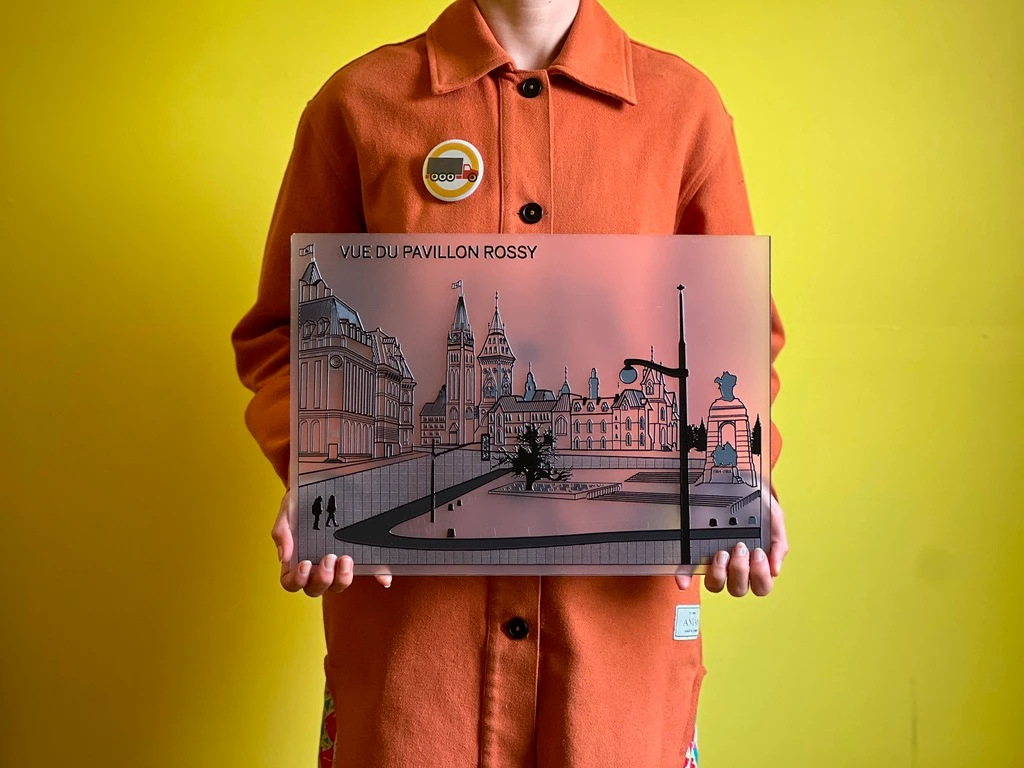
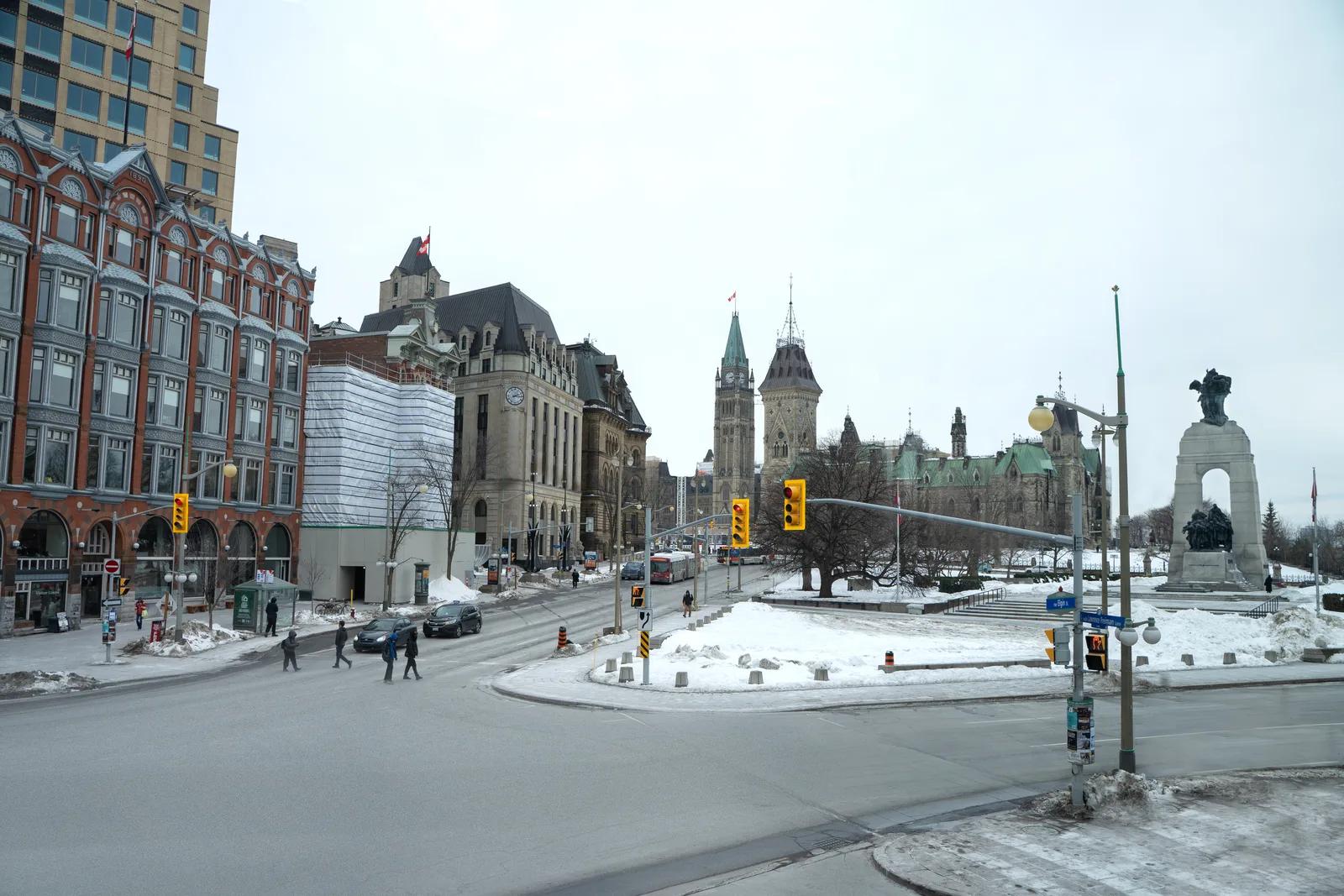 Reveal the original object: View from the Rossy Pavilion
Tactile Panel: View from the Rossy Pavilion, National Arts Centre. Frosted plastic, 16”.5’ x 11”.7’ -
Felt figure
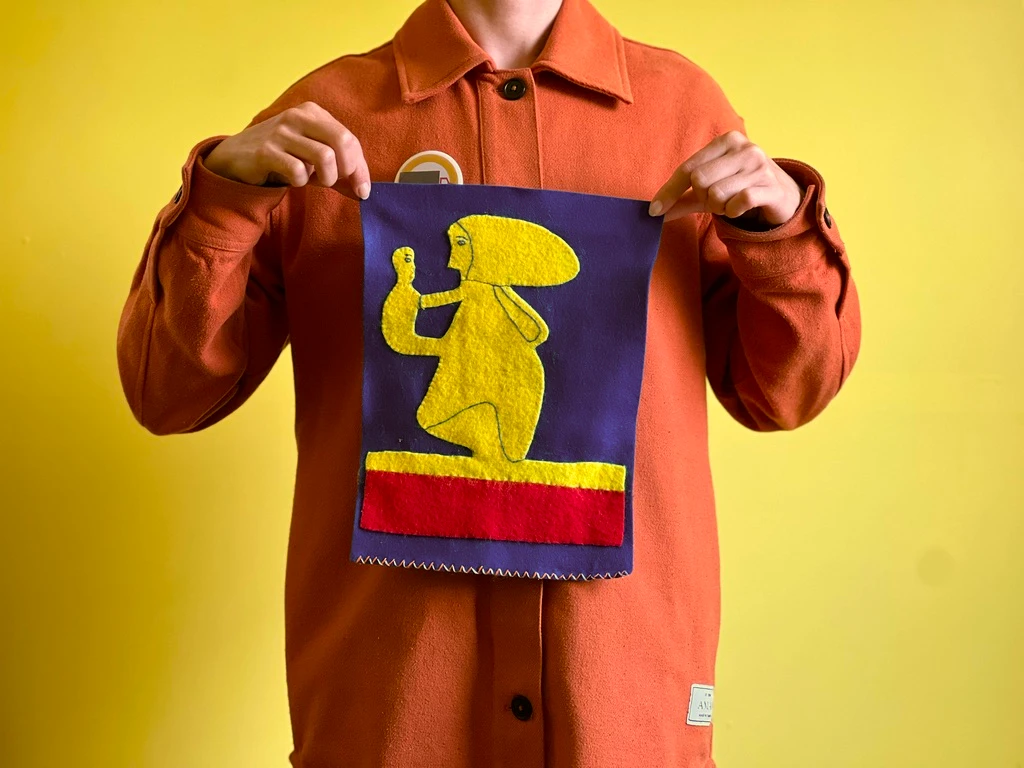
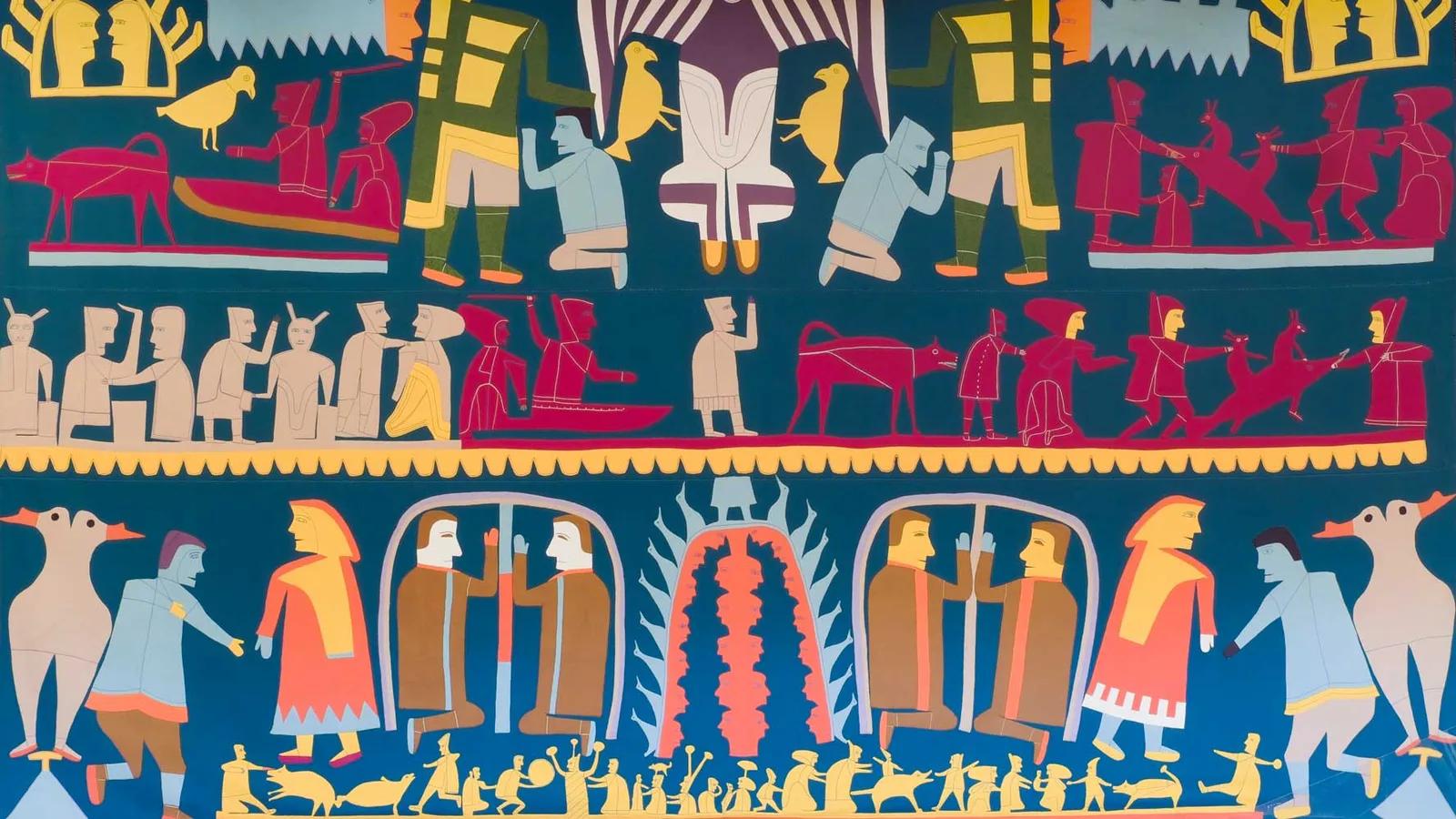 Reveal the original object: Felt figure
Untitled Tapestry, Jessie Oonark, stroud with felt appliqué and embroidery floss, approximately 9.5 x 12.5 inches, 1972.
See more See less
-
Wayfinding sign

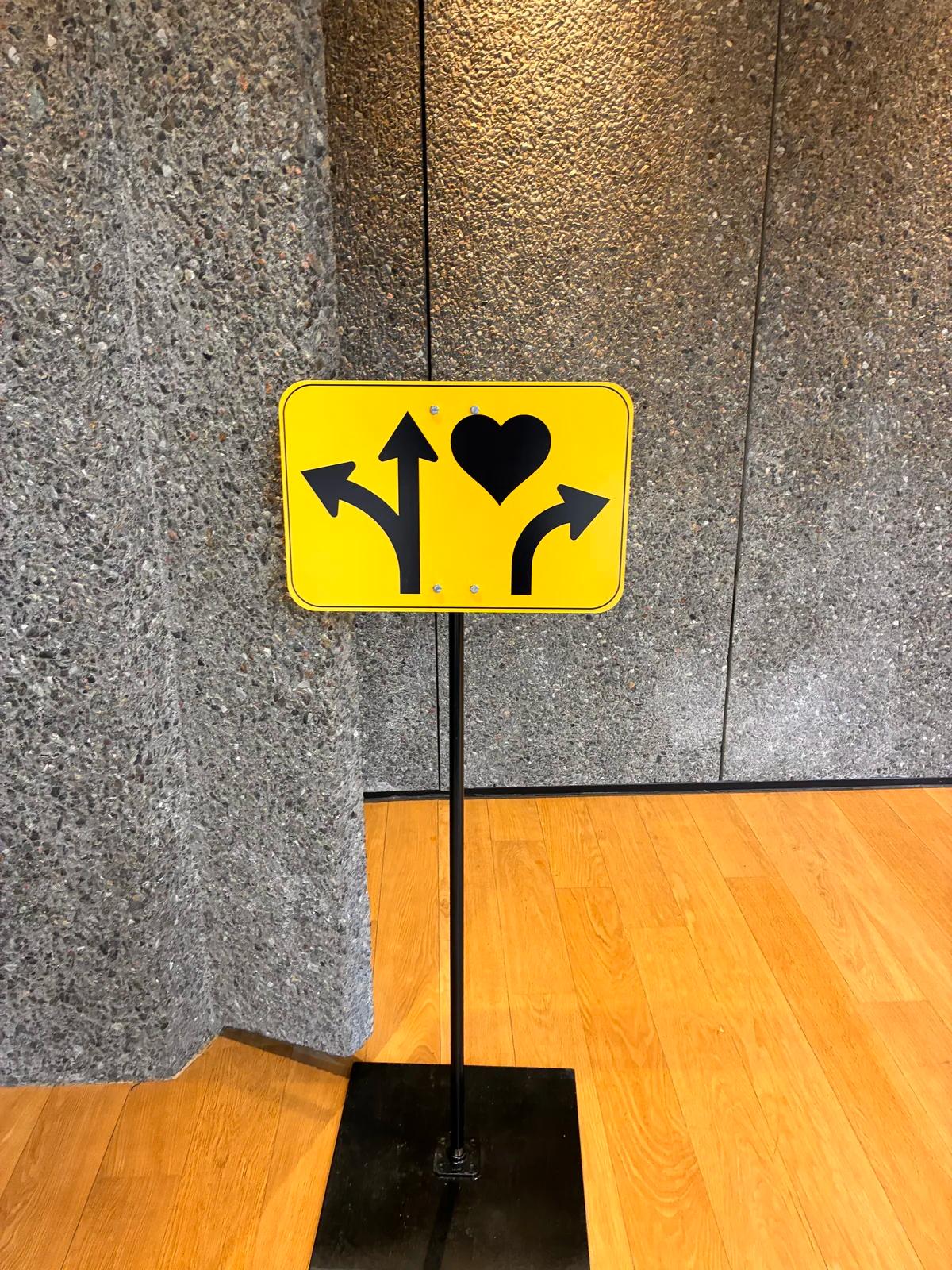 Reveal the original object: Wayfinding sign
Camions Traffic Sign, Heart and Arrows.
About
Hi! I am Letizia, creator & lead researcher of Tactile Beauty

Montreal-born, I am a cultural worker working across French, English and Italian. My experience brings together performance, cultural mediation and accessibility in an evolving practice focused on experiencing art beyond sight.
I trained in live audiodescription with Danse-Cité/UQAM in 2021, and in 2024 I delivered tactile tours as a Museum Interpreter at the National Gallery of Canada. My M.A. at Goldsmiths, University of London, and a volunteer stay at the Cavazza Institute for the Blind in Bologna shaped how I bring performance, tactile learning and accessibility together.
- Danse-Cité/UQAM Trained in live audiodescription
- National Gallery of Canada Museum Interpreter
- Goldsmiths & the Cavazza Institute M.A., University of London; tactile learning in Bologna
Read more
My training spans art history, physical theatre and performance making (M.A. Goldsmiths, University of London). While working as a cultural mediator and videodescriber in Montreal, I trained in live audiodescription with Danse-Cité/UQAM in 2021. I have since delivered live and recorded audiodescription for theatre, performance and visual arts across cultural venues in Montreal, Toronto and Ottawa.
My longstanding relationship with Bologna began with an academic exchange over the course of my undergraduate studies. In 2023, I was introduced to best practices in tactile learning during a volunteer stay at the Cavazza Institute for the Blind. While working as a Museum Interpreter at the National Gallery of Canada, I delivered tactile tours as part of the gallery’s Wellbeing Programs in 2024. The same year, I began mentoring a Francophone audiodescriber at the National theatre Théâtre français, supporting the development of French-language audiodescription in the Canadian capital region. This collaboration with the Théâtre français allowed me to develop a tactile pilot project around the site-specific performance Camions—paving the way to Tactile Beauty.
Co-working
Organization I've collaborated with
Timeline
The project
Tactile Beauty began in Spring 2026 at the French Theatre of the National Arts Centre in Ottawa, Canada, with a first tactile rendering of a site-specific performance. This Fall, Phase 2 will take me to the Fondazione MAST in Bologna, Italy, focusing on tailored guidance and tailored audiodescription to explore photography.
-
Phase 1
CompleteCamions Pilot, National Arts Centre, Ottawa
A tactile audio-walk pilot around Camions at the National Arts Centre, Ottawa.
Read more about this phase
Camions, Fantômes de la liberté, an audiowalking tour of the National Arts Centre (NAC).
The challenge: create an offering around Mélanie Binette’s Camions, Fantômes de la liberté (Trucks [Phantoms of Liberty]) accessible to francophone Blind and Low Vision audiences.
Stemming from the events of the 2022 trucker protests known as the “Freedom Convoy” in Ottawa, Mélanie Binette invited the public on an audio performance unfolding throughout the public spaces of the National Arts Centre. The journey culminated in a view of Parliament Hill, the site of the truckers’ protests, from the Rossy pavilion, one of the NAC’s glass-walled spaces.
The Tactile Version
The resulting tactile tour introduced Blind and Low Vision (BLV) francophone participants to the National Arts Centre’s architecture, its public art, and to Camions’ site-specific scenography.
By offering a miniaturized route of a journey spanning the indoor and outdoor spaces of the three-level building, it also allowed access to audiences with reduced mobility. The entire experience therefore took place within a studio located near the Camions (Trucks) meeting point, the so-called “Departure garage.”
Samples of architectural materials were placed on various tactile stations, including concrete with granite pebbles, lightweight fiberglass, polished limestone, and red carpet typical of formal events.
The NAC’s public art was illustrated by a miniature birch bark canoe, and a felt reproduction of a sample from a tapestry. Miniatures of site-specific installations included a wooden toy crane, plastic cones, and playful, reinvented traffic signs.
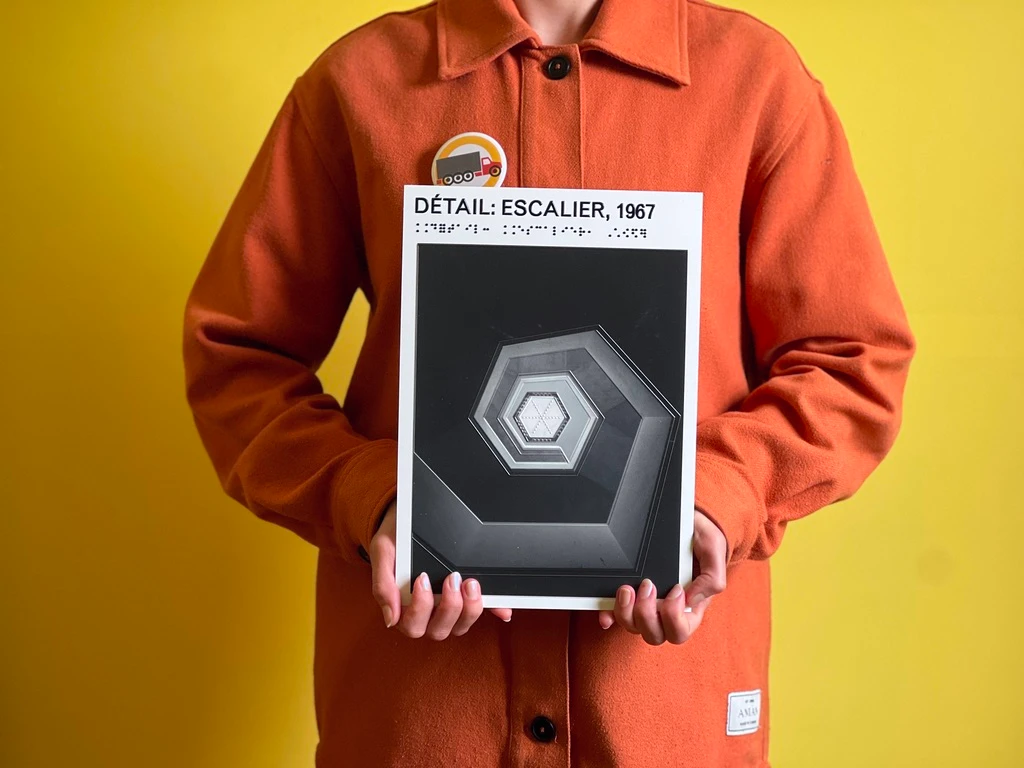
In particular, the offering featured a tactile photograph of a 1967 archival image, designed in Bologna by MAD Servizi Culturali and printed in Ottawa at Terra Reproductions.
Acknowledgements
Thank you to the six different departments of the National Arts Centre that have allowed me to offer this experience, to the creative minds from Le milieu de nulle part who have brought us the performance Camions (Trucks), to local Braille print services Terra Reproductions for their willingness to try something new, and to the National Gallery of Canada’s Educational Department for making it possible to touch a miniature canoe.
Above all, I would like to thank Management Art and Development Cultural Services (MAD Servizi Culturali) in Bologna for sharing invaluable knowledge and for acting as an external eye in this pilot. I look forward to renewing our collaboration over the next phase of Tactile Beauty.
-
Phase 2
In progressFondazione MAST, Bologna
A photographic exhibition at Fondazione MAST exploring tailored guidance and sensor-activated audiodescription.
Read more about this phase
This fall, Tactile Beauty travels to Fondazione MAST in Bologna for a photographic exhibition exploring tailored guidance and audiodescription. Developed with MAD Servizi Culturali and La Girobussola, this phase tests sensor-activated delivery to accompany tactile exploration in real time.
The NAC pilot project raised questions about how recorded tactile guidance might be combined with audiodescription to support greater autonomy, and how technology could deliver this audio context responsively.
These questions will inform a second project developed in collaboration with MAD Servizi Culturali and La Girobussola, centred on a photographic exhibition at Fondazione MAST in Bologna. Complementing the NAC pilot, this phase will explore how audiodescription can accompany tactile exploration through sensor-activated delivery, drawing on technical knowledge exchanged between Italy and Canada.
-
Phase 3
ExploratoryNext Steps: International Exchange & Local Collaborations
New tactile prototypes with local artists, technologists and Blind and Low Vision consultants, and research partnerships with universities.
Read more about this phase
Phase 3 turns to Canada's own path toward accessible design, developing new tactile prototypes with local artists, technologists and Blind and Low Vision consultants. It also opens the door to research collaborations with universities and institutions like the CNIB, testing where tactile art can go next.
Canada has committed to becoming barrier-free by 2040, with a growing emphasis on preventing barriers through inclusive design, collaboration and innovation. Tactile Beauty contributes to this broader shift by exploring how accessibility can be integrated into artistic creation from the outset, rather than added afterwards. I am currently pursuing funding opportunities to continue bringing knowledge from Italy and abroad into the Canadian context.
The next Canadian phase will focus on further developing tactile prototypes through collaboration with local artists and technologists, and testing with previous Blind and Low Vision Ottawa-based consultants, and a focus group led by the Canadian National Institute for the Blind (CNIB).
I am actively seeking collaborations with universities and academic researchers to further test and evaluate my prototypes before making them available to the public.
Ultimately, the integration of tactility in the arts aims to move beyond the tactile translation of an original work towards tactile expression and aesthetics. Rather than treating tactility solely as a means of improving accessibility, Tactile Beauty asks whether it might become an emerging artistic practice in its own right—inviting artists, researchers and institutions to explore its possibilities together.